
 Nervous System Burnout: Why the Calmest-Looking Person Isn’t Really Calm

They speak softly, smile politely, and always say they’re “fine.” They never complain, keep everything moving, and seem like the rock of the team.
But that calm? It’s not composure. It’s a collapse.
As a stress coach and somatic educator, I’ve seen it again and again: the person who looks the most put-together is often the one closest to nervous system burnout.
The Neuroscience: Welcome to Functional Freeze
When most people think of the stress response, they think of fight or flight. But there’s a third state that’s more common than we realize — freeze.
Freeze doesn’t always look like panic. Often, it shows up as emotional flatness, social withdrawal, “I’m fine” responses, going quiet under pressure, or feeling numb, dissociated, or spaced out.
This is called dorsal vagal dominance, where the nervous system shuts down to preserve energy. It’s the biology of burnout. The body conserves fuel because it perceives the threat as inescapable.
And here’s the kicker: freeze can look like high-functioning coping, especially in professional settings.
Personal Story: My Mask Looked Like Control
When I burned out in 2011, I wasn’t a mess. I wasn’t breaking down in meetings. I was holding it together — leading teams, meeting deadlines, and showing up.
Outwardly, I appeared calm. Inwardly, I was numb. I thought I was being resilient. I didn’t realize I’d entered the third stage of the stress cycle: shutdown.
My nervous system had stopped reacting, not because I was coping, but because I was cooked. That’s when I began to study the body’s role in stress and resilience — and everything changed.
Somatic Insight: Stillness Isn’t Always Safety
In Clinical Somatic Movement, we look for neuromuscular patterns that signal shutdown: limited range of motion, flattened breathing, and hypertonic muscles that don’t release, even at rest.
People in freeze often can’t feel much sensation at all. That’s not peace — that’s disconnection. The first step is re-establishing a safe connection to the body, gently, without force.
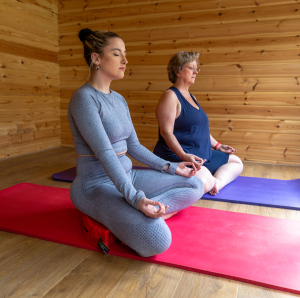 Practical Tools: How to Spot and Soften Freeze

Check In, Not Out
Ask yourself: Do I feel my body right now, or am I just observing it? Freeze often feels like watching yourself from outside.
Micro-Movements = Micro-Reconnection
Lie down and slowly turn your head side to side, noticing how far it moves. Don’t push — just notice. Sensory input rebuilds trust.
Reclaim the Exhale
In freeze, breath gets stuck. Try long, slow exhales (6–8 seconds) through pursed lips. This tells your nervous system: we’re safe to soften.
Shift Environments
A frozen system needs fresh input. Change lighting, temperature, posture, or location every 60–90 minutes to break monotony.
Final Thought: Calm Isn’t the Goal. Regulation Is.
Let’s stop idealizing the always-composed professional. Let’s stop assuming silence means strength. Instead, ask: What does your nervous system need to feel safe and present again?
Feeling Fried Behind the Calm?
You don’t have to wait for a full burnout to reclaim your body.
Book a call to discuss your needs. You can call us at 07768 493157, email alison@alisoncharles.co.uk or use the link below to book a complimentary discovery session.
Book a Stress Management Discovery Call
Because calm isn’t regulation. And regulation is where your real power lives.


